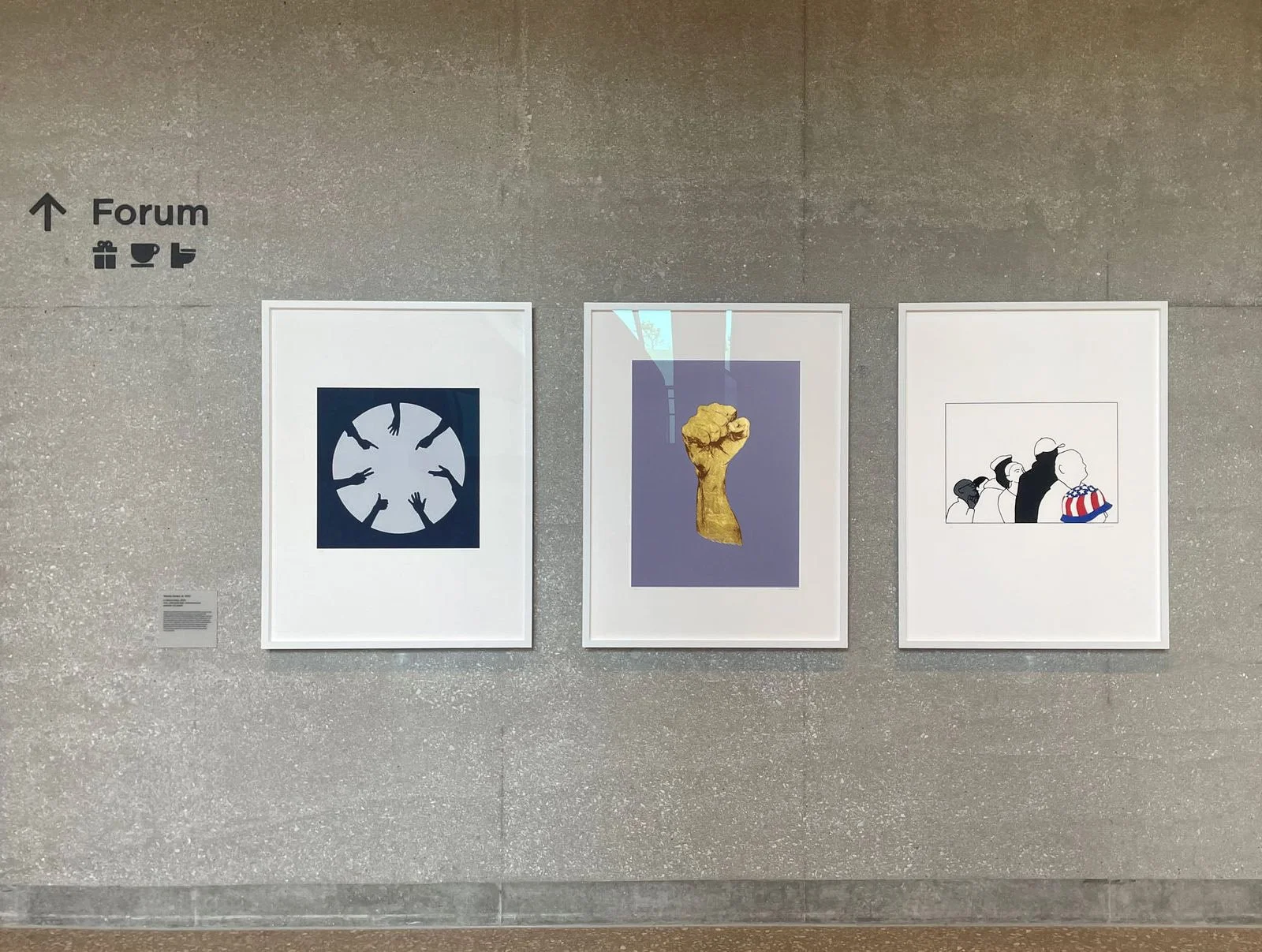
I am delighted to share that my suite of seven silkscreen prints, In Seven Days, has been acquired by the Obama Presidential Center.
This acquisition is particularly meaningful to me because I have been working on this for twenty years. I was there from the very beginning, travelling across the United States as a first-hand witness to President Obama’s historic election. The work is about capturing a moment in history for future generations. Much like the Obama Presidential Center, it is about legacy, it uses President Obama’s election as the starting point to study democracy, change, and collective engagement throughout history, in the present, and into the future. To be in Chicago for the opening of the Obama Presidential Center in 2026 and to see In Seven Days… become part of its permanent collection feels like a remarkable full-circle moment. I was there at the start of this story, and I am so happy I am here to see its next chapter unfold.
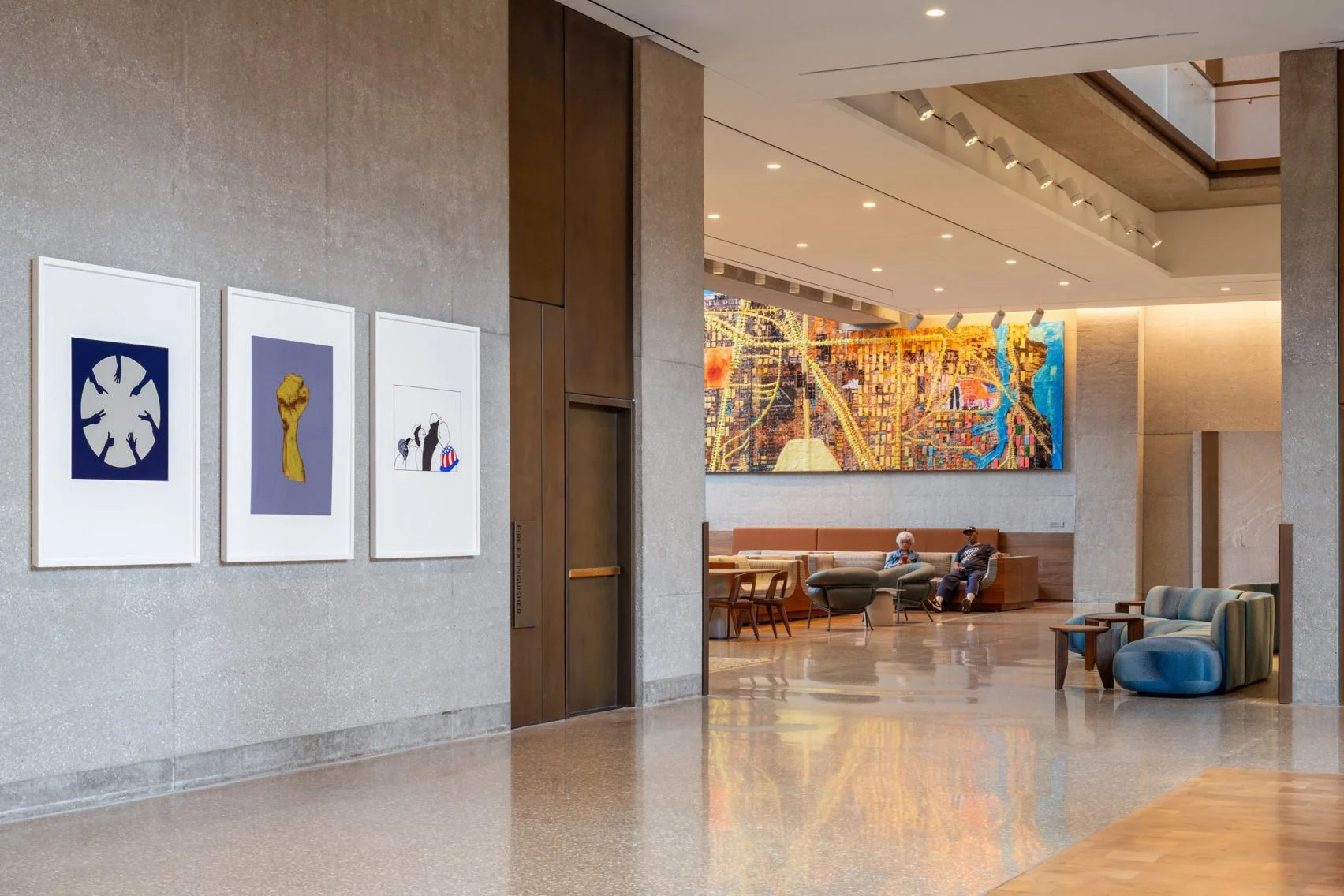
Day 1 Light, Day 2 Struggle and Day 3 Hope from In Seven Days… in the Our Story Atrium at The Obama Presidential Center, Chicago
In Seven Days… is on display in the Our Story Atrium, where it is installed alongside other works including Mark Bradford's City of the Big Shoulders and Nick Cave & Marie Watt’sThis Land, Shared Sky.
The Obama Presidential Center has acquired the complete suite of seven In Seven Days… silkscreen prints. The work will be displayed as a rotating curation of three prints, creating an exciting opportunity for ongoing engagement with the themes contained in the work over time.

IIn Seven Days..., 2010
7 silkscreen prints with water-based enamel ink and 24k gold leaf on 335 gsm Coventry Rag cotton paper, each 133 X 101.5 cm
Each print carries its own visual language and symbolic framework that can be explored with audiences in a number of ways. It will be used to:
Educate, engage and stimulate conversations about all those who came before President Obama and the long arc of history.
Inspire people to reflect and see themselves in the story.
Act as a call to service, encouraging people to start their own journey.
I am are grateful to the Obama Presidential Center for becoming the steward of this work and for creating a home where these conversations can continue to evolve.
In the meantime, I wanted to take this opportunity to unpack some of the meaning contained in the first three prints on display .
Each silkscreen print is shown with its accompanying work from the Arkhe series, a curated archival work that shows represents my extensive research and creative process.

Day 1, Light
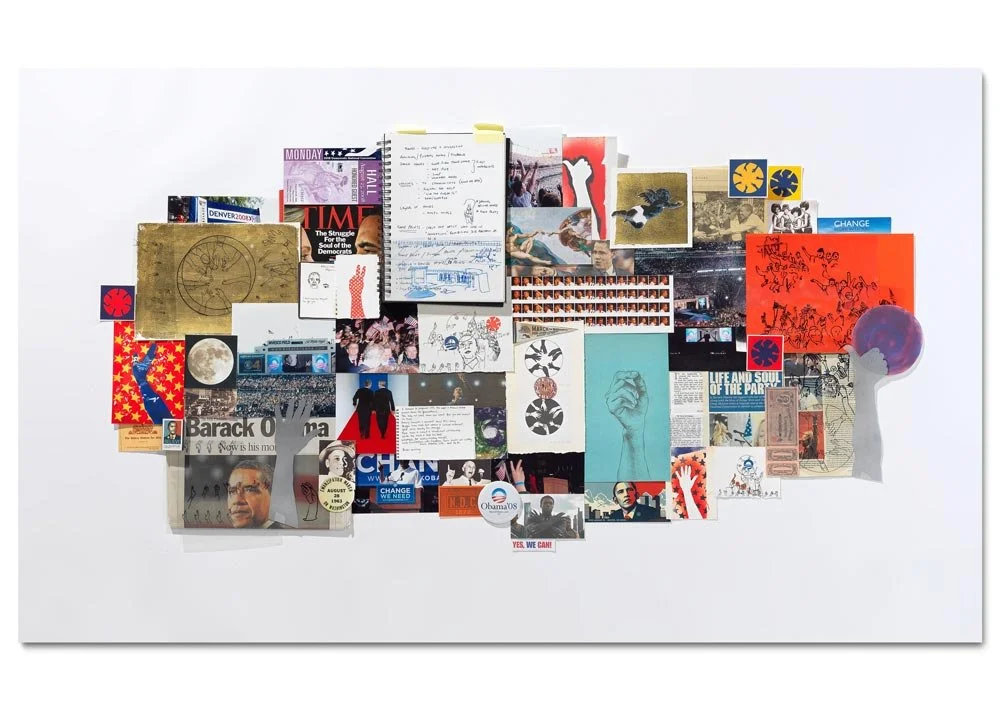
Arkhe I, Light
Day 1, Light
Day 1 marks the beginning of the story. It represents the genesis of the cycle and the moment when something new comes into being. As I created the work, I was thinking about the story of creation, in which light emerges from darkness on the first day, and about what it means for a journey to begin.
The seven hands, united within a circle of light, represent people coming together in common purpose. The image was inspired by my experience at the Democratic National Convention in Denver's Mile High Stadium, where Barack Obama formally accepted the Democratic nomination. Surrounded by more than 84,000 people, I witnessed an extraordinary eruption of collective energy unlike anything I had experienced before. What captivated me most was the movement of people's hands: raised, reaching, applauding, signalling hope and belief. I used these gestures to capture the atmosphere of that moment and the sense of possibility that filled the stadium.
Throughout In Seven Days, hands and body language serve as recurring motifs, reflecting my interest in the unspoken ways we communicate, connect, and express shared values. The imagery in Day 1 establishes many of the visual symbols that reappear throughout the series, creating a thread that runs through the entire cycle and culminates in the seventh print, Peace.

Day 2, Struggle
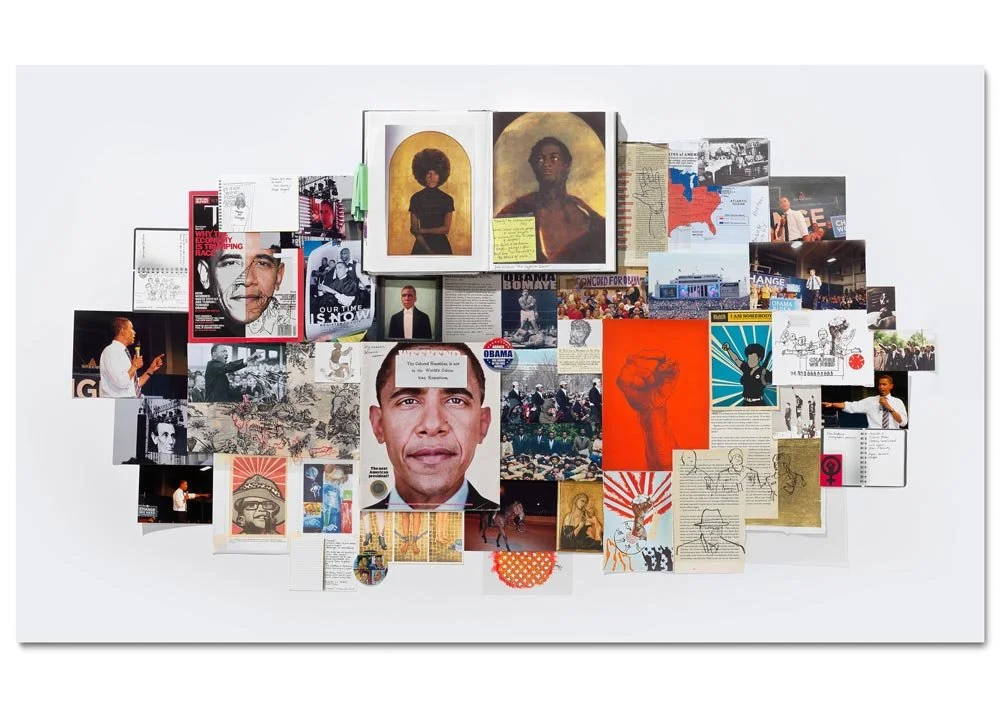
Arkhe II, Struggle
Day 2, Struggle
Day 2, Struggle, continues the idea of the long arc of change. It honours those who came before President Obama: the civil rights movement and figures such as Martin Luther King Jr., the 1968 Olympic protests, and Nelson Mandela, whose spirit of Amandla continues to resonate across the world. The work is concerned with the accumulated strength of multiple struggles, and the way these histories converge and find expression in a single moment of possibility.
At the centre of the composition is a raised fist. While often associated with the Black Power movement, it is also a broader global symbol that has been adopted by socialist, feminist, anti-fascist, labour, and liberation movements worldwide. For me, it represents the idea that we are never struggling alone, and that individual efforts are always connected to wider histories of resistance and solidarity. (For me about this see my previous blog post Struggle, Solidarity, Power: The History Of The Iconic Raised Fist).
The imagery speaks to how each of us draws strength from our own personal histories and lineages. The fist is rendered in 24-karat gold. Gold has long been associated across cultures with light, value, and transcendence. Here, it functions not only as a symbol of resistance and strength, but also as a way of honouring heritage itself—giving it weight, luminosity, and presence.
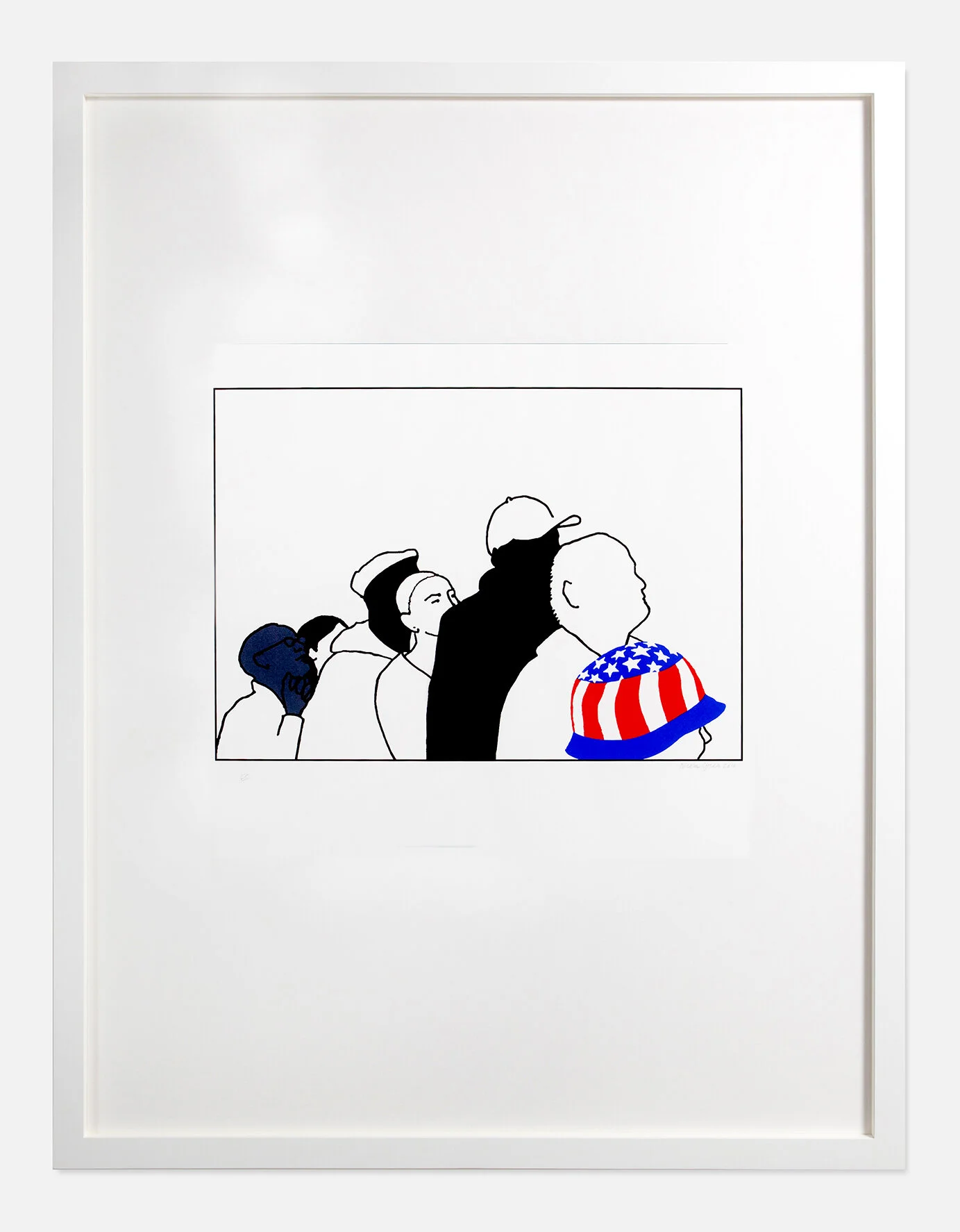
Day 3, Hope
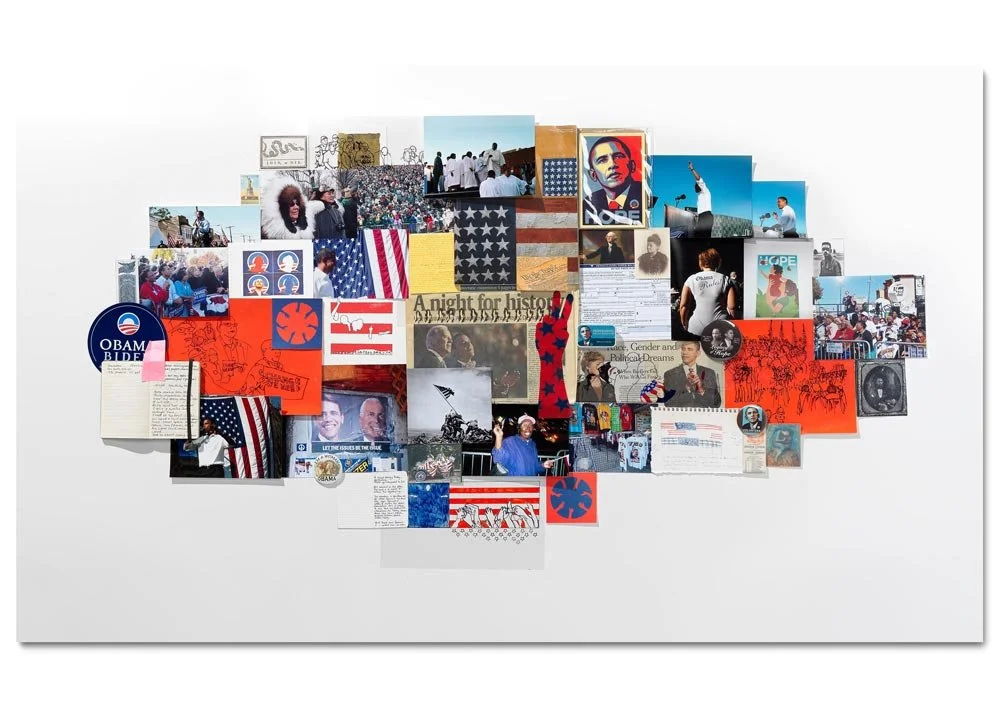
Arkhe III, Hope
Day 3, Hope
When I reflected on the 2008 campaign, I quickly realised that the story was far larger than President Obama as an individual. Day 3, Hope, is a tribute to the American people and to the democratic process itself. It speaks to the idea of the American Dream, and to the belief that when people come together, meaningful change can happen, even against the odds.
One of the things that stayed with me most was the experience of waiting. I saw people queuing for hours to attend rallies. The atmosphere was not always loud or celebratory; often it was quiet, even still. I was particularly struck by the calm patience of older African American women I spoke with, many of whom had lived through, and carried, the long arc of change across generations.
In developing the series, I experimented extensively with abstraction, using silkscreen as both a drawing and distilling tool. I pushed the materials to reduce forms to their most essential elements, isolating symbols while still holding onto their emotional and narrative weight. Through this process, meaning became embedded in the simplicity of the imagery, allowing each layer to carry its own resonance.

